Skip to content
Ifenri

The round

What we are raising, and what we will not claim

Ifenri is bootstrapped. There is no round open today, no valuation and no signed investor. What exists is the structure of the next raise — what it buys, which evidence has to be in hand before it is asked for, and the figures the founder will publish the moment they are set rather than guess at now.

Current stage

Bootstrap — funded by the work itself

The blueprint's funding strategy starts with service revenue, not a term sheet. That is not a humblebrag; it is the cheapest possible proof, and it is the stage Ifenri is actually in today.

What the bootstrap stage funds

Current stage
  • Paid pilots — charged from pilot one, not given away
  • Grants and programme support, where eligibility is confirmed
  • Equipment leasing rather than buying
  • Personal savings and mapping revenue

Mapping revenue from the first paid flights is deliberately the first line, because it is the only line that proves anyone wants the service. Grants, leasing and savings extend it; none of them replaces it.

The position, stated plainly

Open round
None
Raised to date
Nothing
Revenue to date
None
Farms served
None
Robot in the field
None
Valuation
None set

If any of these changes, this table is the first thing updated.

The staged ladder

Bootstrap, then pre-seed — nothing is skipped

The full five-stage table, with each stage's evidence and use of capital, is on the funding strategy page. Read from below, the same sequence says something simpler: every stage is bought with evidence produced by the stage before it, and the next raise is pre-seed.

  1. 01

    Bootstrap

    Current stage

    Funded by the work itself, not by an investor

    Evidence required first
    A cluster chosen, ten organisations willing to pay, a build log
    Used for
    • Paid pilots — charged from pilot one, not given away
    • Grants and programme support, where eligibility is confirmed
    • Equipment leasing rather than buying
    • Personal savings and mapping revenue
    Note
    This is the only stage Ifenri is in. Nothing below it has happened yet.
  2. 02

    Pre-seed

    Next raise

    The next raise — and the one this page is about

    Evidence required first
    Paying farms, repeat bookings, a working product, field data, clear unit economics and a working robot prototype
    Used for
    • A small serviceable fleet rather than a large one
    • The first paid operations hires
    • A robotics engineer
    • Software for dispatch, job records and reporting
    • Compliance and insurance
    Note
    Gate 1 and Gate R1 must already have passed. Target gross margin on core services is 35% or better.
  3. 03

    Seed

    Later

    Only after two clusters run profitably

    Evidence required first
    Multi-cluster operations, strong margin, a technician network, proprietary data and a robot delivering paid tasks
    Used for
    • Scale operations
    • The shared platform
    • Small-batch manufacturing
    Note
    Gate 2 and Gate 3 passed; 30–50 farms; 60%+ repeat booking rate.
  4. 04

    Series A

    Later

    Only after units exist and are repeatable

    Evidence required first
    A repeatable model, robots in service, and a post-harvest or processing pilot underway
    Used for
    • Manufacturing
    • Regional expansion
    • Post-harvest and processing assets
    • Quality systems
    Note
    Gate 4 passed; five or more rugged units in service; a supplier base.
  5. 05

    Growth

    Later

    Only when revenue runs across the chain

    Evidence required first
    Revenue across the seed-to-table chain, a consent framework and named data partners
    Used for
    • Local manufacturing
    • Africa expansion
    • Data products
    Note
    Gate 5 and Gate 6 passed. A data product requires a named partner before it is claimed.

Pre-seed, specifically

The gates that have to have passed before this raise is asked for

Pre-seed is the next raise, so it gets the detail. Both conditions below are pass/fail, published in advance, with the response to failure written down next to them.

Month 3

Gate 1 — Unit economics

5+ paying farms, 50%+ reorder intent, positive margin per hectare

Month 12

Gate R1 — First robot

Robot delivers a paid task and the customer wants more

Gate 1 is the commercial condition: five or more paying farms, 50% or better reorder intent and a positive margin per hectare, with a target gross margin of 35% or better on core services. Gate R1 is the technical one: a robot that delivers a paid task, and a customer who wants more. Pre-seed capital is what scales both — which is why it is raised after them, not instead of them.

Use of funds

What pre-seed money buys, in the blueprint's own categories

The blueprint lists six categories for pre-seed: fleet, pilot hiring, a robotics engineer, software, compliance and insurance. Where §12.1 gives a planning range it is published with the blueprint's own caution attached — these ranges came from earlier research notes and are not quotations, and three current quotes are required for every line before money is committed.

Fleet — the machines that earn

A small mapping and spraying capability, with batteries, spares and charging. Deliberately sized to the hectares already sold, not to a plan.

₦1m–₦5m mapping drone · ₦8m–₦30m+ spraying drone · ₦2m–₦8m batteries, spares and charger

Pilot hiring

A full-time or contract drone pilot to fly, map, spray and care for the equipment. The blueprint names the role but no salary band.

To be quoted

Robotics engineer

The hire that makes Track B real. Part-time or a university collaborator from month 2, full-time after revenue — market rate to be established.

To be quoted

Software

Dispatch, job records, field reporting and the intake that turns a farmer's message into a priced job. Mostly the founder's own time plus tools.

Tools covered by the ₦1.5m–₦4m laptop and software line

Compliance

Incorporation, tax registration, drone approvals and the licences that must exist before a paid spray job. Approval fees and timelines are regulatory items and are marked confirm.

₦60,000–₦150,000 incorporation and compliance · approval fees to be quoted

Insurance

Drone liability, equipment and third-party damage, with product liability later. Priced per fleet and per job, so it cannot be fixed before the fleet is.

To be quoted

Planning context, not an ask

The blueprint’s full starting budget also lists lines that are not pre-seed categories but still have to be paid for: laptop and software tools at ₦1.5m–₦4m, pilot training and certification at ₦500,000–₦3m, six months of field operations at ₦3m–₦15m, and working capital at ₦3m–₦10m. Vehicle and insurance, drying and storage equipment, the robotics workshop and tools, rover prototyping, and the engineer’s salary have no ranges at all — the blueprint says to get quotes, and so does this page.

Confirm before any money is committed

Every range above is from earlier research notes and is not a quotation. Prices move, the naira moves, and used equipment changes the maths entirely. The blueprint’s instruction is at least three current quotes for every line — and that instruction is the reason this page publishes ranges as ranges rather than a budget total that looks authoritative and is not.

What we will not claim

The things the founder refuses to put in a deck

This is not an apology for a page that is not finished. It is the position the whole site is built on: an investor who finds one invented figure stops trusting the rest, and the fastest way to lose a room is to describe a company that does not exist yet.

Traction that does not exist

No paying customers, no hectares served, no revenue. Every project on this site is labelled with its real status, and the pilot record says what would have to be true for it to count as done. A pre-seed deck is stronger for saying this first.

A valuation that has not been agreed

Ifenri has not raised and no valuation has been negotiated with anyone. Publishing a number would be publishing a wish. The round size, instrument and valuation are set with the first investor who offers terms, and appear here the day they are agreed.

Partnerships that are not signed

The blueprint names anchor cooperatives, aggregators, processors and off-takers as requirements for later stages, and capital sources as leads. Not one is a signed agreement, so none is described as a partner.

Market size we cannot source

The market page cites only figures with a named, linked publisher, and marks the ones that come from an interested party. The serviceable market is a bottom-up hectare count from the chosen cluster, which is not complete yet. An invented top-down total would be the easiest thing on this site to falsify.

A fleet, a factory or a robot that exists

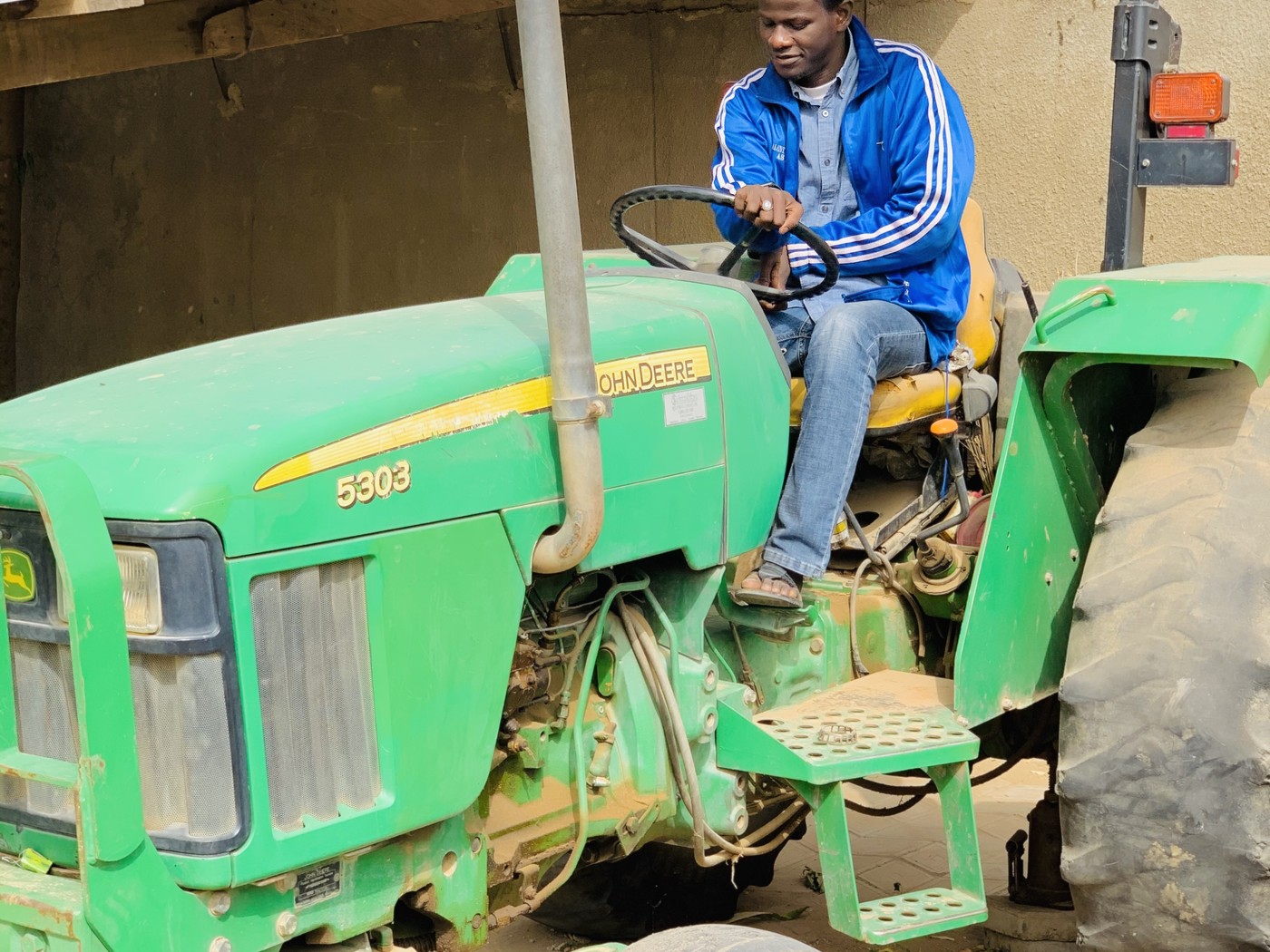
There are no farms, no machines, no factory and no robot in a field. The plan is written in the future tense throughout, and the first robot milestone is a prototype in a test plot by month 6 and a paid task by month 12 — neither of which has happened.

Savings, loss and yield improvements we have not measured

Stage 2 begins with a loss baseline measured before any equipment is sold. Until that baseline is taken, no percentage improvement will be quoted by Ifenri anywhere.

The ask

Three figures the founder will set, not guess

Publishing a placeholder is deliberate. An invented number that later moves costs more trust than an honest blank, and a blank with a reason attached tells you something real about how this company intends to operate.

Round size

To be confirmed by the founder

Bounded by what the pre-seed has to buy — a small fleet, a pilot, a robotics engineer and the first compliance and insurance — and by the margin Gate 1 has produced by then. Both sides of that bound are still open.

Instrument

Not yet determined

Equity, a convertible or a SAFE are all plausible for a Nigerian pre-seed, and the choice affects both the cap table and the terms. It will be decided with counsel rather than pre-announced.

Valuation

Not yet determined

Set in negotiation with the investor who leads. Ifenri will not anchor it publicly, because an anchor nobody has agreed to becomes a broken promise in the first term sheet.

All three are published here as soon as they are agreed. In the meantime, the useful conversation is not about the size of the round — it is about whether the gates are the right gates, and whether the evidence behind them is being measured honestly. That conversation can start today.

Data room & diligence

What an investor will ask for, and what exists

Taken from the blueprint's own legal and compliance checklist. Most of it is pending, because most of it depends on incorporation or on regulators. Nothing here is marked done on the strength of a plan.

PendingConfirm
  • Incorporation — name reservation, MEMART, CAC filing

    Pending

    Tracked at CAC portal level. Certificate and RC number are produced by the incorporation and will be published here once issued.

  • RC number

    Pending

    Does not exist until the CAC filing completes. No RC number is claimed anywhere on this site.

  • TIN and tax registration

    Pending

    Follows incorporation. FIRS and the state authority are the starting points named in the blueprint.

  • Business bank account, separate from personal

    Pending

    Follows the RC number.

  • SMEDAN registration

    Pending

    Named in the blueprint as an SME registration step.

  • Cap table

    Pending

    There is nothing to allocate yet. The founder will publish a cap table only after the round size and instrument are set, because a cap table without terms is a fiction.

  • IP assignment — company ownership of code and designs, trademark

    Pending

    Contractor and employee IP clauses, plus the Ifenri trademark, are lawyer and IP-registry work. Nothing is assigned yet.

  • Drone approvals — ONSA End-User Certificate, NCAA registration and operator certificate, pilot licensing

    Confirm

    The blueprint reports an End-User Certificate from ONSA as the first step as of May 2026, then NCAA registration, an operator certificate and pilot licensing under Nig.CARs Part 21. The correct current sequence, documents and fees must be confirmed directly with both bodies. Nothing flies commercially before that is settled.

  • Agrochemical handling, storage, disposal and applicator training

    Confirm

    To be confirmed with agriculture regulators and an agronomist, including any state-level rules, before the first spray job is quoted.

  • Autonomous ground-machine operating rules

    Confirm

    The rules for autonomous ground machines in fields, and on or across roads, are not confirmed. This is checked with the relevant authorities and a Nigerian lawyer before field deployment.

  • Insurance — drone liability, equipment, third-party damage

    Pending

    To be placed with an insurer or broker once the fleet is specified. Product liability follows only if processing begins.

  • Pilot agreements and service terms

    Pending

    A paid pilot agreement and service terms are drafted with a lawyer before the first invoice, not after.

  • Data-use consent and the data charter

    Pending

    The charter is published on /data-charter as an honest draft. Consent text tied to real farm data is drafted with a lawyer before any data product exists.

  • Import, customs and permits for components

    Confirm

    Duties, permits and clearance for components must be confirmed with a customs agent. They affect robot bill-of-materials cost directly.

  • Unit-economics model, per hectare

    Pending

    The blueprint's 12-line template exists and is published on /blueprint. The numbers are empty until real jobs have run, and the founder will not fill them with estimates and present them as results.

  • Food-safety registration (Stage 3, later)

    Confirm

    Registration of processed foods, standards, hygienic facility and HACCP-style controls, confirmed with NAFDAC, SON and a food-safety advisor before any processing partnership is signed. Not relevant to the pre-seed, and listed so it is not discovered late.

What already exists

The working plan itself, published in full, including the gates, the risk register and the legal checklist. This website, the unit-economics template and the pilot scorecard. A build log for the robotics track, once there is something to log. Nothing in this column is an investor-grade document yet, and none is presented as one.

What a lawyer and accountant do next

The blueprint is explicit that its checklist is a to-do list, not legal advice, and that a Nigerian lawyer and an accountant should be engaged. Incorporation, the TIN, the bank account, IP assignment and the trademark, pilot and service contracts, and the consent language are all professional work. Regulatory items — drone approvals, agrochemical rules and autonomous ground-machine rules — are marked confirm because they are questions for the authorities, not for Ifenri.

Start the conversation

Make food secure and farming profitable — at the same time

Tell us your crop, your hectares and where you lose money today. We will tell you honestly whether Ifenri can improve that hectare yet — and if we cannot, we will say so.

Farmers & cooperatives

Book mapping, scouting or machinery for your cluster. Pilots are paid and measured from the first hectare.

Book a field service

Buyers & processors

Talk to us about reliable, traceable supply and where the loss actually happens in your crop.

Discuss supply

Funders & partners

Read the working plan, the gates, and the unit economics before you commit a naira.

Investor brief